



Preventing Standing Water Around Your Coop Without Major Construction
Protect Your Flock with Smart Drainage

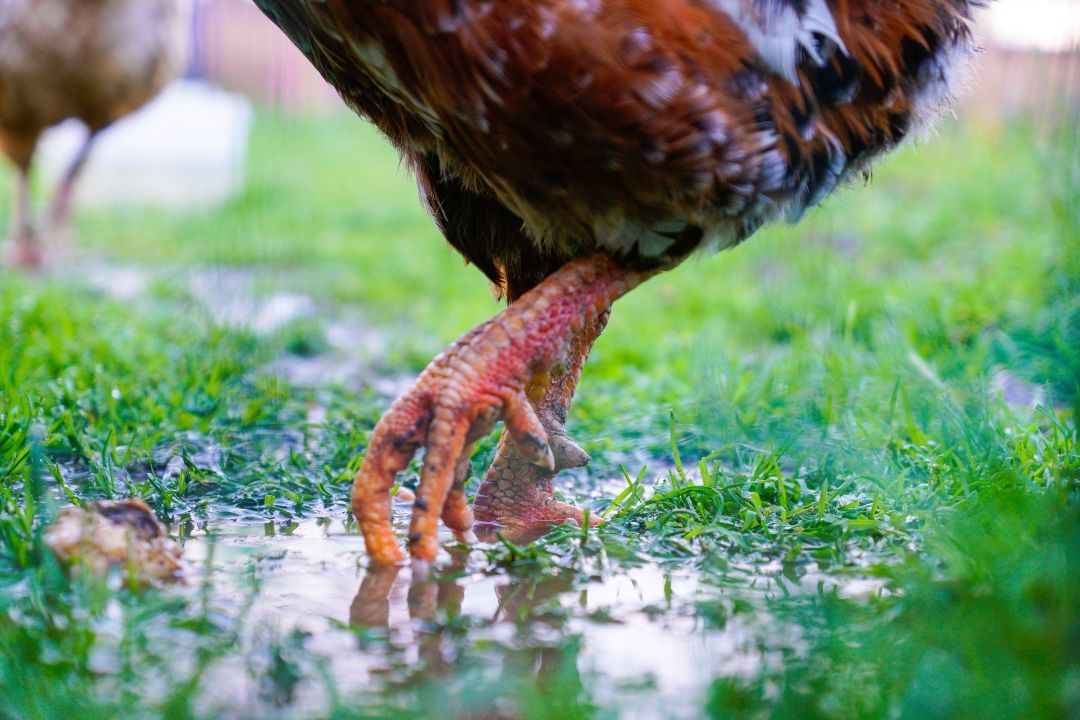
Standing water puddles around your chicken coop aren't just annoying. They're hotbeds of risk. Stagnant water makes the perfect mosquito factory and breeds bacteria that can sicken your flock, creating muddy conditions where parasites thrive. You don’t need to bust your budget to resolve this problem, though. This is one that responds well to a little good old-fashioned know-how, a block of time, elbow grease and the right tools.
The Hidden Dangers in Those Puddles
Mosquitoes need as little as a teaspoon of standing water to breed. That mini puddle by your coop? It's a perfect nursery for those pesky insects. While you think you’re just housing chickens, you’re also providing a natural breeding ground for pests that bite and transmit diseases straight to your treasured feathered friends.
Bacteria love the wet conditions around standing water, as well. E. coli and Salmonella multiply exponentially in muddy soil, and your chickens track this contamination everywhere, including into their nesting boxes. Their little feet unwittingly spread it wherever they wander.
That’s not all. Parasitic worms also flourish in damp ground. Your innocent chickens pick up these internal parasites just by doing their thing, scratching around in wet areas. Once established, parasites drain your birds' health and tank egg production.
Eliminating standing water is key to keeping healthy, happy chickens. And you can get the job done without a major construction project.
Reshape Ground to Redirect Water
Next rainstorm, go outside and observe. Where does water collect? Which direction does it flow? Pour a little water out of a measuring cup and see where it heads. You’ll spot patterns quickly this way.
Grab a shovel and start moving soil. Create a gentle downward slope away from your coop and problem areas. Nothing dramatic is needed, just enough angle so gravity does its job.
Two inches of drop across ten feet works great. Push dirt away from the coop foundation. Fill depressions where puddles form. This costs practically nothing except sweat and time.
Cut Strategic Drainage Trenches
For longer-lasting results, dig shallow channels that guide water where you want it. Six inches deep is sufficient. Make them shovel-width across.
Line these trenches with landscape fabric first. This prevents soil from washing back and clogging things up. Fill with gravel to the top. Water flows through the rock spaces and disperses gradually into the surrounding ground.
Heavy runoff areas might need perforated pipes inside the trenches. Channel drains topped with grates from NDS Inc., a drainage-products manufacturer, handle serious water volume while keeping leaves and debris out. Flow control components, such as pvc gate valves, can also be useful when you need to regulate or shut off water movement in connected drainage or irrigation lines.
Capture Roof Runoff Instead of Fighting It
Your coop roof collects tons of water during storms. Normally, this dumps right beside the building, creating the exact problem you're battling.
Rain barrels change everything. Hook them to downspouts, and suddenly you're harvesting water instead of fighting it. Plus, you've got free water stored for washing equipment, hosing down the coop, whatever you need.
Setup takes an hour, tops. Get food-safe barrels, attach them with downspout adapters and elevate them on blocks so the bottom spigot stays accessible. Point overflow outlets away from the coop and you're golden.
Fix Chronically Muddy Runs With Layers
Some areas stay swampy regardless of surface efforts. If the soil composition is wrong, or you're sitting in a natural drainage path, it’s time for a deeper fix.
Remove four to six inches of problematic soil. Haul it elsewhere on your property. Now rebuild properly from the ground up.
Lay large rocks first. Fist-sized stones create spaces underneath for water movement. Cover with smaller gravel. Top with sand if you want, since chickens enjoy it and it drains decently.
Really wet spots benefit from drainage matting or perforated pipes installed under the gravel layers. These help water move laterally before it can pool on the surface.
Maintain Your Systems
Don't install drainage fixes and forget them. Walk around monthly and check performance. After big storms, look for new trouble spots.
Pull accumulated leaves from trenches and grates. Verify rain barrels aren't backing up toward the coop. Make sure slopes haven't eroded at bad angles. These quick checks prevent small problems from becoming disasters.
The Real Payoff
Dry conditions around your coop translate directly to healthier chickens. Your birds won't be tracking filth everywhere. Mosquitoes lose their breeding grounds. Bacterial loads drop significantly. Parasites can't establish themselves as easily.
You'll notice cleaner birds, better laying consistency and fewer health issues overall. Your own experience improves, too, since you're not slogging through mud during daily chores.
These drainage solutions don't require construction expertise or deep pockets. Just a willingness to spend a weekend improving your setup. The effort pays dividends every single day after that.
Standing water problems feel overwhelming when you're staring at what amounts to little lakes around your coop. But they're solvable with straightforward approaches and basic supplies. Your flock depends on you for a clean environment. Give them the dry conditions they need to thrive.
About the Author
Khris Kaylor is the IT manager at Maxx Supply, a leading distributor of pvc supplies. Kaylor began his IT career in 1995 and holds a Microsoft Certified Systems Engineer (MCSE) certification. With a decade of experience in point-of-sale systems — including installation, programming, training and support — he later transitioned to hardware and software support. Kaylor has also collaborated on managing multiple brand websites within the food and beverage industry.
Tags:Farm & Flock











Acreage Life is part of the Catalyst Communications Network publication family.