



Winter Feeder Fun for Families
Create a Festive Bird Charcuterie Board

As winter settles in, many of us cherish the comfort of being at home and the spirit of the holidays. Yet, beyond our windows, the birds that brighten our yards face some of the toughest months of the year.
With snow blanketing the ground and temperatures dropping, their usual food sources such as seeds, berries and insects are suddenly hard to find, making survival much more difficult.
But, we have the unique opportunity to offer a lifeline. You can support local and migrating birds through the winter holidays.
Not only does this practice provide crucial resources for our feathered friends, but it also brings a special kind of connection to the season, offering families a rewarding and meaningful way to engage with the natural world.
Feeding Basics: The Essentials for a Healthy Buffet
Winter is a season of scarcity for birds, as their natural food sources are buried under snow or frozen solid. By providing a reliable source of high-energy foods, you can help them survive the cold months while enjoying their lively presence.
From black-oil sunflower seeds to suet, the right foods can make all the difference. Equally important is ensuring access to clean, unfrozen water and placing feeders in safe, accessible locations. With a little effort, you can create a winter buffet that supports your feathered friends and brings life to your backyard.
Dr. Kathryn Dench, chief scientific advisor at Paw Origins told AcreageLife that high-fat foods such as suet are the single most important dietary addition for birds in winter.
“Fat provides the dense energy birds need to maintain body temperature through freezing nights, when they can burn through as much as 10% of their body weight in stored energy. In practice, I often recommend suet blocks made with natural fats, peanut butter (without xylitol) or black oil sunflower seeds, all rich in calories and easy for small birds to metabolize. Offering a variety of feeders (hanging, platform and ground) helps accommodate different species, from chickadees to juncos," Dr. Dench said.
What to Serve: High-Energy Foods
Andrew and Joanne Marino, owners of The Backyard Birding Store, share that foods that are high in energy are most beneficial for backyard birds during the cold winter months
“Two food choices that fit the bill are black oil sunflower seeds and suet. Both are high in fat, which birds depend on to survive below-freezing temperatures. Black oil sunflower seeds are a favorite among many birds and is a versatile choice as it can be used in all types of feeders, from hoppers to tubes to trays. In my opinion, black oil sunflower seeds should be at the top of the list, given their versatility and preference by a great number of backyard birds,” Joanne Marino said.
The best high-energy foods for feeders include:
- Black-oil sunflower seeds: A universal favorite for many species.
- Nyjer (thistle) seeds: Ideal for attracting finches.
- Cracked corn, millet and peanuts: Perfect for ground-feeding birds such as juncos and sparrows.
- Suet: A critical high-fat food source that provides essential energy for staying warm.
Place a bird identification guide near your favorite window to recognize the feathered visitors to your yard.
Remember, food isn’t the only necessity during the winter. Providing fresh, clean, unfrozen water is just as vital, as natural sources often freeze over, leaving birds with few options to hydrate.
A heated birdbath or a simple dark dish refilled daily with warm water can be a game-changer for thirsty backyard birds, offering them a welcome source for both drinking and bathing throughout the coldest days. Nothing is more enjoyable than watching birds at your bird bath in winter!
"I believe the value of the supply of a clean, unfrozen water source in the winter months cannot be overestimated by wild birds. People tend to focus on food, but fresh water is crucial for birds to drink and keep their feathers in optimal insulation,” Katie Jones, owner at Squirrel A Store of Buried Treasure, said.
“Their metabolism requires water to maintain their body temperatures, enabling them to endure cold weather. I would always suggest the use of a simple bird bath heater to ensure that the water does not freeze altogether when the temperature goes below zero.”
Feeder Location and Maintenance
Where and how you set up your feeding station can significantly impact the safety and well-being of visiting birds.
Choose a spot that is sheltered from predators and protected from harsh winds, yet visible enough for you to enjoy the visitors from your window. Regular maintenance is also crucial, even in winter; feeders should be kept clean and free of mold, old seed and snow buildup. The extra effort ensures birds can return to a safe and healthy spot all season long.
Do-It-Yourself Holiday Feeders & Treats
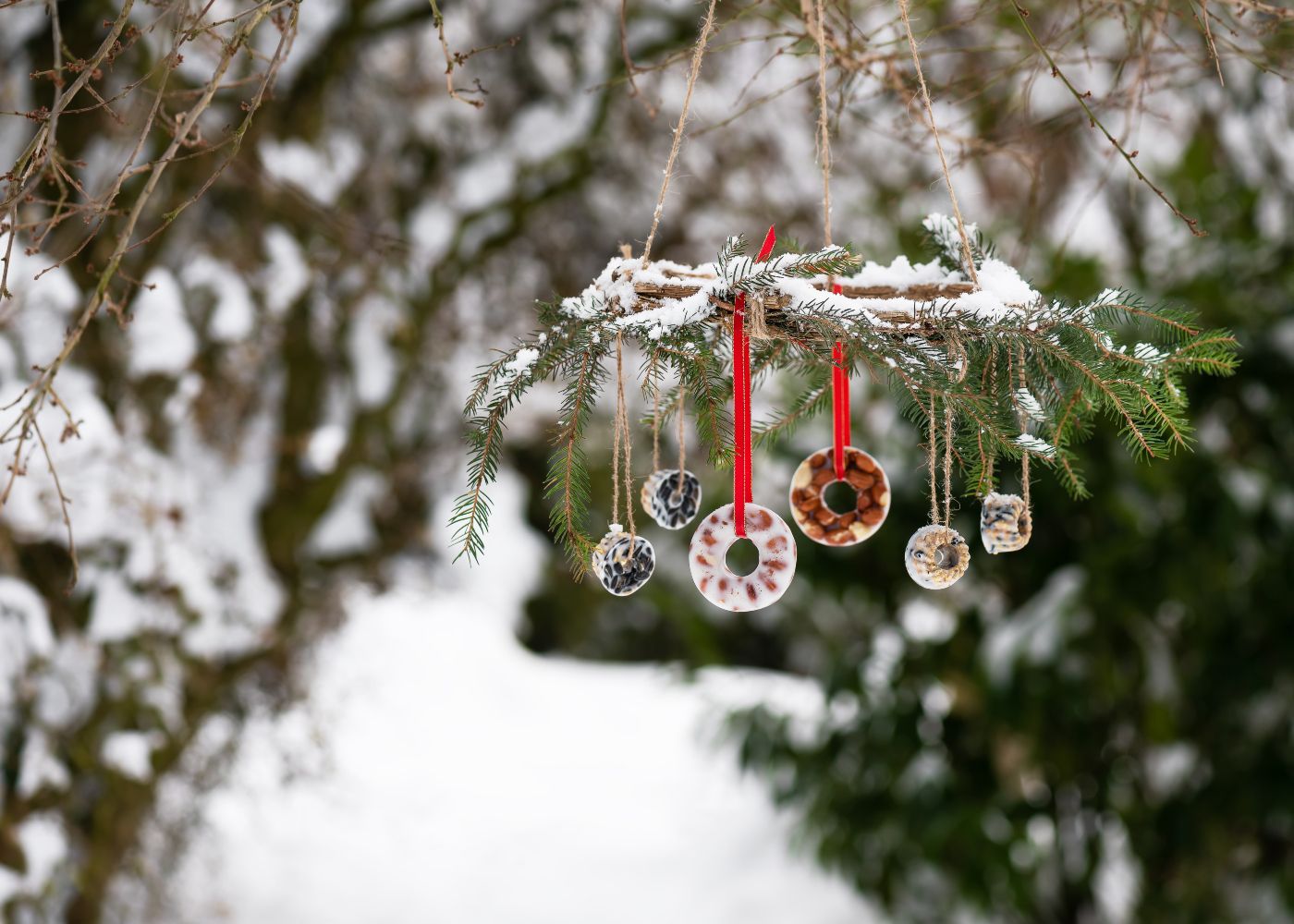
The holiday season is the perfect time to get creative and make your own bird feeders. Not only do these DIY [do-it-yourself] projects provide essential food for birds, but they also offer a fun, hands-on activity for the whole family.
From simple pinecone feeders to festive suet cakes, these homemade treats are a great way to celebrate the season while supporting wildlife. There are many easy ideas to bring joy to your yard and your feathered visitors.
Pinecone Feeders:
Tie a string to a pinecone, coat it with peanut butter or seed butter and roll it in birdseed.
Note this as an excellent and easy activity for kids.
Seasonal Suet Cakes:
Melt suet or vegetable shortening and mix in bird-safe ingredients such as rolled oats, unsweetened dried cranberries and sunflower seeds.
Pour the mixture into a mold (ice cube tray, small container) to set.
Natural, Biodegradable Feeders:
For holiday items, fill halved orange peels with seeds or use hollowed-out gourds as hanging feeders.
Holiday Charcuterie Board for Your Backyard Birds
Create a festive charcuterie-style board outdoors to delight your feathered guests.
Use a wide, flat tray or wooden board and arrange a colorful spread of bird-safe items such as black-oil sunflower seeds, unsalted nuts, rolled oats, dried unsweetened cranberries, chopped apples, orange slices, millet sprays and mealworms. Arrange the foods in festive shapes or rows for a cheerful look. Place the board on a raised platform or sturdy, snow-free spot where birds can gather safely.
Not only will this creative offering provide a nourishing feast, but it also makes a fun seasonal decoration and an excellent observation point.
Encouraging Wildlife Observation
The activity around your feeders stands out in winter, providing a front-row seat to the vibrant life of visiting birds. Observing these feathered guests can foster a deeper connection to nature, spark curiosity and offer comfort during the coldest months.
Place a bird identification guide near your favorite window to quickly recognize the feathered visitors to your yard. Start a family "bird journal" to log sightings, note unique behaviors and create a screen-free holiday tradition.
By providing a mix of food types and feeder styles, you'll support a diversity of birds and enjoy observing their unique behaviors up close
Whether you're an experienced birder or a family looking to start a new tradition, spending time bird watching provides learning for all ages. By attracting a variety of species and taking note of their behaviors, you’ll discover the beauty and resilience of wildlife even in the heart of winter.
Safety & Sustainability: Feeding Birds Responsibly
Feeding birds during the winter is a rewarding activity, but it comes with responsibilities. Ensuring the safety and health of your feathered visitors means avoiding harmful foods, maintaining clean feeders and creating a safe environment.
Once you begin feeding, it’s important to stay consistent, as birds may come to rely on your food source.
"Consistency builds trust. Birds come to rely on predictable food sources during the months when natural resources are scarce. Abruptly stopping feeding mid-winter can leave them vulnerable, especially during sudden cold snaps. In clinics and wildlife work, I’ve seen how even minor disruptions in food availability can impact survival rates in smaller species. It’s better to feed modestly but steadily throughout the season than to start and stop intermittently," Dr. Dench said.
Winter feeding is an excellent way to help birds survive the harshest months, all while bringing new life and joy to your own backyard. Start your own tradition this holiday season and experience the simple pleasure of watching new visitors flock to your home.
Tags:Country Journal













Acreage Life is part of the Catalyst Communications Network publication family.